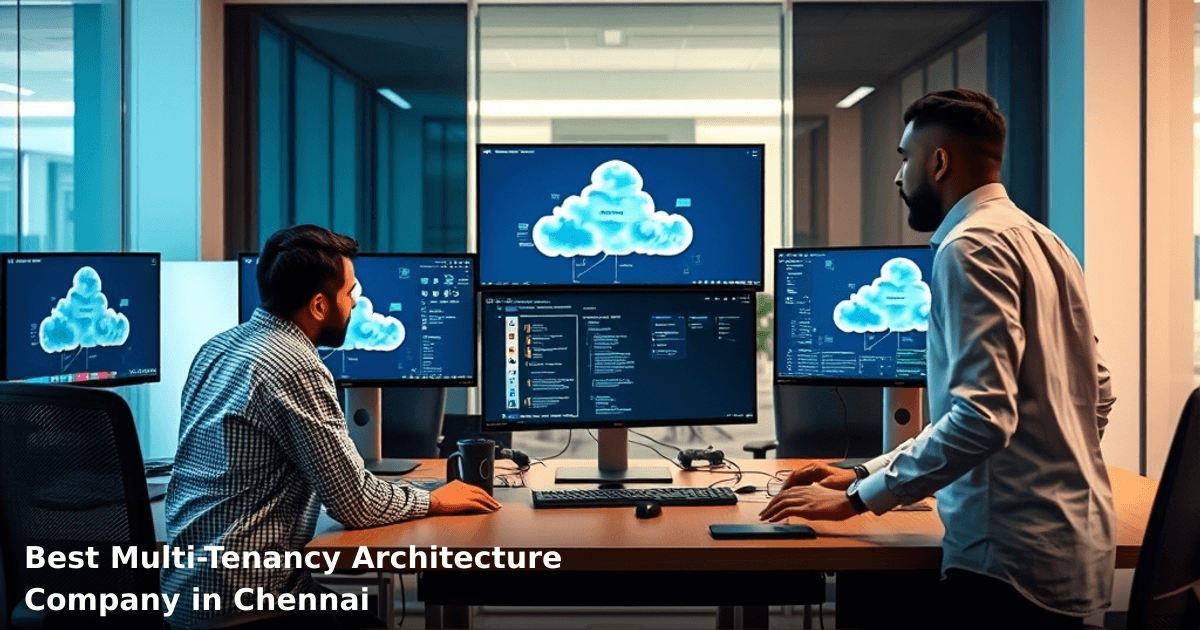
Best Multi-Tenancy Architecture Company in Chennai: How to Choose
When you're building a SaaS product or enterprise platform for Indian customers, the infrastructure you choose can make or break your margins. Multi-tenancy architecture in Chennai India has become the go-to approach for businesses that want to scale without spinning up separate servers for every client. But choosing the right partner to build it? That's where most SMBs stumble.
Quick Answer: Multi-tenancy architecture lets you serve multiple customers from a single application instance while keeping their data isolated—cutting your infrastructure costs by 60–70% compared to single-tenant setups. In Chennai, you'll find vendors ranging from ₹8–15 lakh for MVP builds to ₹40+ lakh for enterprise-grade systems. The best fit depends on your customer base size, data security needs, and whether you need WhatsApp or CRM integration built in from day one.
Why Multi-Tenancy Architecture Matters for Indian Businesses
The Cost Reality
A textile exporter we worked with in Tiruppur was paying ₹45,000/month to host separate instances for 12 clients. After migrating to a proper multi-tenancy architecture, that dropped to ₹12,000/month. That's ₹3.96 lakh saved annually—money they reinvested in customer support and product features.
According to a McKinsey report, Indian SMBs that optimised their infrastructure costs saw 25–35% improvement in gross margins within the first year. Multi-tenancy isn't just a technical choice; it's a business lever.
Scalability Without Chaos
When you're running single-tenant (one app per customer), adding your 50th client means provisioning new servers, new databases, new monitoring. With proper multi-tenancy architecture in Chennai India, your 50th client runs on the same infrastructure as your 5th. Your DevOps team doesn't multiply; your revenue does.
Data Security Concerns (Real, Not Theoretical)
Indian businesses are rightly paranoid about data isolation. A pharmaceutical company in Bangalore lost ₹22 lakh to a data breach because their vendor used poor row-level security. Multi-tenancy done right—with proper encryption, database-level isolation, and audit trails—actually improves security compared to hastily built single-tenant systems.
What Multi-Tenancy Architecture Actually Is
The Core Concept
Multi-tenancy means one codebase, one database (or one database with logical separation), serving multiple independent customers. Each customer's data is isolated—they can't see each other's records, even though they're technically sharing the same infrastructure.
Three Common Patterns
1. Database-Per-Tenant: Each customer gets their own database. Most secure, highest infrastructure cost. Use this if you're serving banks or healthcare clients.
2. Shared Database, Separate Schema: One database, but each tenant gets their own schema. Middle ground. Common in India for B2B SaaS platforms.
3. Shared Database, Shared Schema: Everyone's data in one schema, separated by a tenant_id column. Cheapest, fastest to build, but requires ironclad row-level security. Most Indian startups start here.
Why Chennai Vendors Matter
Chennai has a mature ecosystem of developers trained in enterprise architecture. Unlike tier-2 cities where you might struggle finding someone who's built multi-tenant systems at scale, Chennai has vendors who've shipped these for companies like Zoho, HubSpot partners, and domestic SaaS platforms. That matters because multi-tenancy requires specific expertise—it's not something junior developers should lead.
How to Evaluate Multi-Tenancy Architecture Companies in Chennai
| Evaluation Criteria | What to Look For | Red Flags |
|---|---|---|
| Past Projects | 3+ live multi-tenant SaaS platforms they've built | Portfolio shows only single-tenant apps or marketing sites |
| Data Isolation | Can explain row-level security, encryption strategy, audit logs | Vague about how they separate customer data |
| Scalability Testing | Load testing reports, database optimization docs | "We'll optimize later" or no performance benchmarks |
| Compliance | GDPR-ready, GST compliance for Indian data, ISO certifications | No mention of compliance or security standards |
| Integration Capability | Experience with WhatsApp Business API, CRM/ERP systems, payment gateways | Limited to basic CRUD operations |
| Support Model | Dedicated architect, clear SLA, post-launch support plan | Generic support, no post-launch commitment |
| Cost Transparency | Itemized breakdown: design, development, infrastructure, testing | Lump sum quotes without detail |
Step-by-Step Guide for Choosing the Right Partner
We set up and manage your cloud infrastructure
From AWS to Azure — we design, deploy, and maintain reliable infrastructure for Indian startups and SMBs.
1. Define Your Tenant Isolation Level
Before you call any vendor, decide: Who are your customers? Are they competitors (need strict isolation) or complementary businesses (lighter isolation okay)?
A logistics SaaS in Pune serving different transport companies needed database-per-tenant because customers didn't want to share infrastructure at all. A HR tech startup serving SMBs across India was fine with shared schema because their customers aren't competitors.
This decision drives 40–50% of your architecture cost. Get it wrong, and you'll either overpay or face security complaints later.
2. Audit Their Technical Stack
Ask for their standard tech stack for multi-tenancy projects:
- Backend: Node.js, Python, Java, Go? (All can work; consistency matters more)
- Database: PostgreSQL, MySQL, MongoDB? (PostgreSQL is gold standard for row-level security)
- Infrastructure: AWS, GCP, DigitalOcean? (AWS is safest bet for Indian compliance)
- Monitoring: Do they use Datadog, New Relic, or something custom?
A Chennai vendor we know uses PostgreSQL + Node.js + AWS for 90% of their multi-tenant builds. They've optimized this stack to death. That's better than a vendor who uses whatever was trendy last month.
3. Check Their Data Security Credentials
Ask these three questions:
- "Walk me through how you handle a data breach scenario." (Listen for incident response, not just prevention.)
- "Show me your encryption strategy—data at rest and in transit." (Should mention TLS 1.3+, AES-256 minimum.)
- "How do you handle GDPR right-to-deletion for one tenant without affecting others?" (This is surprisingly tricky; their answer reveals depth.)
If they stumble on any of these, keep looking.
4. Request a Technical Architecture Review
Ask for a 1-hour call with their lead architect (not the sales person). Show them your business model, customer profile, and growth plan. A good architect will:
- Push back on over-engineering ("You don't need database-per-tenant yet")
- Ask about your compliance needs (GST, data residency, audit requirements)
- Suggest cost optimizations ("We can start with shared schema and migrate to separate schemas at 500 customers")
If they just nod and agree to everything, they're not thinking critically.
5. Verify Post-Launch Support
Multi-tenancy isn't a one-time build. You'll need:
- Performance tuning as your customer base grows (database indexing, query optimization)
- Security patches when new vulnerabilities emerge
- Schema migrations without downtime (this is hard)
Ask: "What happens 6 months after launch when we need to add a new feature?" A vendor who has a clear support model and pricing for this is worth 20% more than one who goes silent post-launch.
Common Mistakes to Avoid
Mistake 1: Choosing Based on Price Alone
A ₹12 lakh quote vs. a ₹28 lakh quote might seem like an easy choice. But the cheaper vendor might give you:
- Weak row-level security (data leak waiting to happen)
- No performance optimization (your app crawls at 500 customers)
- Limited scalability (you'll need a complete rewrite at ₹50+ lakh in 18 months)
We've seen businesses spend ₹15 lakh on a cheap build, then ₹35 lakh on a rewrite. Total: ₹50 lakh. A ₹28 lakh build done right avoids this trap.
Mistake 2: Underestimating Integration Complexity
Your multi-tenant SaaS won't exist in isolation. Your customers will want:
- WhatsApp integration (for notifications, customer support)
- CRM/ERP sync (to pull data from their existing systems)
- Payment gateway integration (Razorpay, Cashfree, etc.)
If your vendor hasn't built these integrations before, they'll treat each one as a custom project—adding weeks and ₹2–5 lakh per integration. A vendor with WhatsApp Automation and CRM Development expertise can bake these in from the start.
Mistake 3: Ignoring Compliance from the Beginning
GST compliance, data residency (servers in India), GDPR readiness—these aren't afterthoughts. A vendor who says "We'll handle compliance later" will cost you ₹8–12 lakh in rework.
An MSME-registered logistics platform in Bangalore needed their multi-tenant system to track GST separately per customer. The vendor hadn't thought about this during design. Rework: ₹6 lakh. Delay: 4 months.
Mistake 4: Not Planning for Database Migrations
You'll grow. Your schema will change. Your isolation model might shift from shared schema to separate schemas. A vendor who doesn't have a migration strategy will lock you in.
Ask: "How do you handle zero-downtime migrations?" If they don't have a clear answer, keep looking.
Key Takeaways
- Multi-tenancy architecture in Chennai India can cut your infrastructure costs by 60–70% compared to single-tenant setups, but only if built correctly.
- Three isolation patterns exist: database-per-tenant (most secure, priciest), shared database with separate schemas (balanced), and shared database with row-level security (cheapest, riskiest).
- Choose your isolation level first—it drives 40–50% of your architecture cost. Don't let a vendor decide this for you.
- Verify technical depth: Ask about data security, scalability testing, compliance, and post-launch support. A good vendor will have clear answers.
- Budget ₹8–15 lakh for MVP, ₹40+ lakh for enterprise-grade systems. Cheaper quotes often hide debt that costs more later.
- Avoid common pitfalls: Don't chase the lowest price, don't underestimate integration complexity, don't defer compliance, and don't ignore migration planning.
- Post-launch support matters as much as the initial build. Ask what happens in month 7 when you need new features or performance tuning.
Frequently Asked Questions
Quick answers about multi-tenancy architecture chennai
01 How much will a multi-tenancy architecture setup cost for my Chennai-based SaaS startup? ›
A multi-tenancy implementation typically runs ₹8-15 lakhs for a basic setup with a Chennai-based firm, depending on your database complexity and tenant isolation level. If you're scaling to 50+ customers, expect ₹20-25 lakhs for enterprise-grade security with dedicated tenant databases—this is 40-60% cheaper than building separate single-tenant instances for each customer. Most reputable Chennai firms offer phased implementation, so you can start with ₹5 lakhs for the foundation and add security layers as you grow.
02 How long does it actually take to migrate our existing single-tenant application to multi-tenancy? ›
A typical migration for a mid-sized application takes 4-6 months if you're working with an experienced Chennai team, though this depends heavily on your codebase quality and database size. We've seen companies with poorly documented legacy code stretch to 8-9 months, while clean codebases with good test coverage finish in 10-12 weeks. The real timeline killer isn't the architecture change—it's data segregation validation, which alone consumes 30-40% of the project duration.
03 Is multi-tenancy worth it if we only have 15-20 customers right now? ›
Multi-tenancy becomes financially justifiable around 25-30 customers, but if you're planning to reach 100+ within 18 months, implementing it now saves you from a painful refactor later that could cost ₹40+ lakhs. For 15-20 customers, you're better off with a lightweight shared-infrastructure setup (₹2-3 lakhs) and upgrading to true multi-tenancy when you hit 40 customers. However, if your customers demand data residency or compliance isolation, multi-tenancy becomes necessary immediately regardless of customer count.
04 What's the biggest mistake SMBs make when choosing a multi-tenancy architecture partner in Chennai? ›
The most common mistake is prioritizing cost over tenant isolation strategy—choosing a ₹6 lakh quote that uses shared databases without proper row-level security, then facing data leaks that cost ₹50+ lakhs in legal fees and reputation damage. Many Chennai firms oversell "database-per-tenant" as the only secure option when it's actually overkill for 80% of SMBs; a hybrid approach with shared infrastructure and encrypted tenant keys costs 50% less and provides sufficient isolation. Always ask your vendor for their specific isolation model, audit logs, and whether they've handled compliance requirements like GDPR or India's data localization rules.
05 What's the first step we should take before even talking to a multi-tenancy architecture company? ›
Start by documenting your current single-tenant architecture in a 2-3 page diagram showing your database schema, authentication flow, and which features are customer-specific versus shared—this takes 3-5 days and saves ₹1-2 lakhs in unnecessary consulting fees. Then identify your top 3 compliance requirements (data isolation, audit trails, multi-region support) and get clarity on whether you need database-per-tenant (most expensive) or schema-per-tenant (most common for Chennai SMBs). With this foundation, you'll know exactly what to ask vendors and can compare ₹10 lakh quotes accurately instead of just picking the cheapest option.
Need this built for your business?
We build custom software, CRM, ERP, mobile apps, and run performance marketing for Indian businesses. Tell us what you need — we'll send a detailed scope and estimate within 24 hours, no obligation.
- Free 30-min scoping call with our tech lead
- Detailed project estimate in writing
- No sales pitch — just honest advice on what makes sense
📞 +91 92794 55684 · 📧 [email protected] · Delhi NCR · PAN India
Innovaira's engineering team designs and builds custom software — CRM, ERP, SaaS platforms, web applications and mobile apps — for growing Indian businesses. ISO 9001:2015 certified for quality delivery.