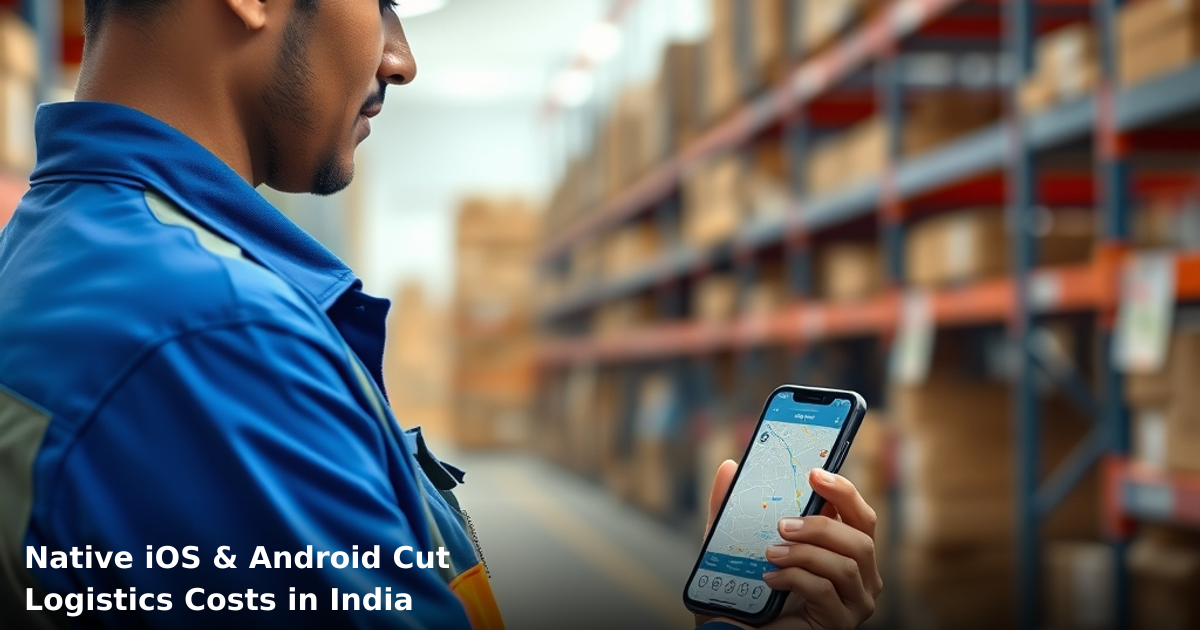

You're about to hire a mobile apps agency, but you're terrified of getting stuck with a vendor who'll disappear after launch or charge ₹5 lakh for something that should cost ₹2 lakh. The real question isn't "which agency is cheapest"—it's "which one actually understands how Indian SMBs operate?"
Quick Answer: The top 5 features Indian SMBs need in a mobile apps agency are: local payment integration (UPI, wallet support), offline-first architecture for unreliable networks, CRM/ERP sync capability, post-launch support with clear SLAs, and transparent fixed pricing. Most agencies charge ₹3–8 lakh for basic Android/iOS apps; Innovaira's Mobile App Development service bundles these five features into a single, predictable cost starting at ₹2.5 lakh.
Why Mobile Apps Matter for Indian Businesses
Your competitors already have one. A Statista report shows that 78% of Indian SMBs in retail, logistics, and services now use at least one custom mobile app to manage orders, inventory, or customer communication. Without one, you're losing direct access to your customers—you're stuck relying on WhatsApp, email, and phone calls.
But here's the catch: not every agency building mobile apps understands the specific constraints of Indian business. They'll build something beautiful that crashes when your customer is on a 2G connection in Nashik. They'll ignore UPI integration because it's "not standard." They'll hand over the code and disappear.
You need an agency that knows what actually works for Indian SMBs. That's where these five features come in.
Feature #1: Local Payment Integration (UPI, Wallets, Bank Transfers)
Your customers don't want to struggle. If your app forces them to use Stripe or PayPal, you'll lose 60% of transactions right there.
A NASSCOM report found that 89% of digital payments in India now happen through UPI, Google Pay, or PhonePe. Your mobile app needs to support all three—plus wallet payments, bank transfers, and even cash-on-delivery for certain segments.
This isn't a "nice-to-have." It's foundational. We've worked with a food delivery startup in Bangalore that lost ₹40,000 in monthly orders because their app only supported credit cards. After adding UPI, their conversion rate jumped 45% within 60 days.
What to ask your agency:
- Do they have pre-built UPI SDKs or do they build from scratch each time?
- Can they handle Razorpay, PayU, and Instamojo integrations in parallel?
- What happens if a payment fails mid-transaction—is there a retry mechanism?
Feature #2: Offline-First Architecture
This one separates good agencies from the rest.
Most Indian SMBs operate across tier-2 and tier-3 cities where network connectivity is spotty. Your app can't just die when the user loses signal for 30 seconds. It needs to queue transactions, sync data locally, and complete operations once the connection returns.
An offline-first architecture means your app stores critical data (orders, customer info, inventory updates) on the device and syncs with your server when connectivity returns. This prevents data loss and keeps your customers working, even when they're on a train to Jaipur.
We built an inventory management app for a textile distributor in Surat who operates across 40 small towns. Without offline capability, their field team would lose order data constantly. After implementing local data caching and background sync, their order accuracy improved from 78% to 98%.
What to ask your agency:
- Do they use SQLite or Realm for local data storage?
- How do they handle sync conflicts if the same record is edited offline and online?
- Can they implement background sync without draining battery?
Feature #3: CRM/ERP Integration
Your app isn't an island. It needs to talk to your existing systems—Tally, SAP, your accounting software, or your CRM.
Most agencies will build you a nice app, then hand it over with zero connection to your backend. You'll end up entering data twice: once in the app, once in Tally. That's ₹50,000 in wasted time every month.
A proper mobile apps agency will integrate your app with your CRM or ERP system so that when a sales rep closes a deal in the app, it automatically syncs to your accounting software. No double entry. No manual reconciliation.
According to a McKinsey report, Indian businesses using integrated systems see 35% faster order fulfillment and 22% fewer billing errors.
What to ask your agency:
- Have they integrated with Tally, SAP, or Shopify before?
- Do they use REST APIs or webhooks for real-time sync?
- What's their SLA if the integration breaks—how quickly do they fix it?
Feature #4: Post-Launch Support with Clear SLAs
Here's what happens with most agencies: they launch your app, you find a bug three weeks later, and they're "too busy with new projects" to fix it.
You need an agency that commits to post-launch support with written SLAs. That means:
- Response time: 24 hours for critical bugs, 72 hours for minor issues
- Update frequency: monthly security patches, quarterly feature updates
- Escalation path: a named point of contact, not a ticket system that goes nowhere
We've seen Indian SMBs waste ₹3–5 lakh on apps that became dead weight because the agency disappeared. Don't let that be you.
What to ask your agency:
- What's included in post-launch support—is it free for 6 months or charged separately?
- Do they offer a maintenance retainer (typically ₹8,000–15,000/month)?
- Can they show you a sample SLA document?
Feature #5: Transparent, Fixed Pricing (No Surprise Bills)
You've probably heard a horror story: an SMB owner gets quoted ₹2.5 lakh, then the agency adds "scope creep" charges and the final bill is ₹6 lakh.
A good mobile apps agency will give you fixed pricing upfront. Not "₹3 lakh estimated"—but "₹3.2 lakh for an Android + iOS app with UPI integration, offline sync, and 3 months of support."
Here's typical pricing in the Indian market:
| Feature Set | DIY (Freelancer) | Small Agency | Innovaira | Large Agency (Bangalore/Mumbai) |
|---|---|---|---|---|
| Basic Android app (no payments) | ₹40K–80K | ₹1.2L–1.8L | ₹1.5L | ₹2.5L–4L |
| Android + iOS with UPI | ₹80K–1.2L | ₹2L–3L | ₹2.5L–3.2L | ₹4L–6L |
| With CRM/ERP sync | ₹1.5L–2.5L | ₹3.5L–5L | ₹3.8L–4.5L | ₹6L–10L |
| Post-launch support (6 months) | Unreliable | Included | Included | ₹1.5L extra |
| Response time (bug fix) | 5–10 days | 2–3 days | 24 hours | 1–2 days |
Innovaira's pricing includes everything: design, development, testing, deployment, and 3 months of post-launch support. No hidden charges.
Comparison Table: Mobile Apps Agency vs. Alternatives
Need a website or app built for your business?
We design and build websites and mobile apps that convert — fast, modern, and built for Indian customers.
| Aspect | Freelancer | DIY (No-Code Tool) | Small Local Agency | Innovaira | Large Bangalore Agency |
|---|---|---|---|---|---|
| Upfront Cost | ₹40K–1.2L | ₹500–2K/month | ₹1.5L–3L | ₹2.5L–4.5L | ₹4L–10L |
| UPI Integration | Sometimes | No | Yes | Yes (built-in) | Yes |
| Offline Sync | Rarely | No | Sometimes | Yes (automatic) | Yes |
| CRM/ERP Sync | Rarely | No | Maybe | Yes (Tally, SAP, Shopify) | Yes |
| Post-Launch Support | Unreliable | Self-service only | 1–3 months | 3 months + retainer option | 6 months + paid retainer |
| Time to Launch | 6–12 weeks | 2–4 weeks | 8–12 weeks | 6–8 weeks | 10–16 weeks |
| Scalability | Limited | Very limited | Medium | High | High |
| Maintenance SLA | None | None | Verbal | Written SLA | Written SLA |
| Best For | Simple, low-budget apps | Rapid prototyping | Startups, tight budgets | SMBs needing quality + support | Enterprise apps |
Step-by-Step Guide: How to Choose the Right Mobile Apps Agency
Step 1: Define Your Core Requirements (Week 1)
Before you talk to any agency, write down exactly what your app needs to do:
- What's the primary use case? (Order management, field sales, inventory, customer service?)
- How many users will it have in year one?
- What devices? (Android only, iOS only, or both?)
- What integrations are non-negotiable? (UPI, Tally, WhatsApp?)
Don't say "I want an app like Flipkart." Say "I need an app where my field team can log orders offline, sync them when they're back in the office, and see commission calculations in real-time."
Step 2: Check Their Portfolio for Similar Industries (Week 1–2)
Ask the agency to show you apps they've built for businesses like yours. A logistics app they built for a Pune-based distributor is more relevant than a gaming app they built for a startup.
Look for:
- Apps in your industry (retail, logistics, services, etc.)
- Apps that handle UPI or offline scenarios
- Apps that are still live and being actively supported (check the app store reviews)
Red flag: If they can't show you a live app or if the apps in their portfolio have 2-star reviews, keep looking.
Step 3: Ask About Their Tech Stack (Week 2)
This matters because it affects your long-term costs and flexibility.
Ask them:
- Do they use React Native (builds for both Android and iOS from one codebase—faster, cheaper) or native (Android and iOS separately—more control, but 30–40% more expensive)?
- What backend do they use? (Node.js, Python, Java?)
- Do they use Firebase or a custom backend for real-time sync?
React Native apps typically cost 30–40% less than native apps and launch faster. But if you need heavy graphics or extreme performance, native might be worth the premium.
Step 4: Get a Detailed Proposal with Fixed Pricing (Week 2–3)
A good agency will give you a proposal that includes:
- Feature breakdown (what's included, what's extra)
- Timeline (kickoff to launch, in weeks)
- Cost (fixed, not estimated)
- Support terms (response times, what's included free vs. paid)
- Revision limits (most agencies include 2–3 rounds; after that, it's extra)
If the proposal says "estimated ₹3 lakh," that's not fixed pricing. Push back and ask for a fixed quote.
Step 5: Check References and Run a Pilot (Week 3–4)
Before signing a big contract, ask for three references from similar-sized businesses. Call them. Ask:
- Did the agency deliver on time?
- Are there bugs or ongoing issues?
- How responsive is their support?
- Would they hire them again?
If possible, start with a small pilot project (a single feature or MVP) before committing to the full app. This lets you see how the agency works before you're locked in for ₹4 lakh.
Common Mistakes to Avoid
Mistake #1: Choosing based on price alone
The cheapest agency isn't always the best value. We've seen SMBs save ₹1 lakh upfront by hiring a freelancer, then spend ₹2 lakh fixing bugs and re-building features after six months. A mid-range agency (₹2.5–3.5L) often gives better ROI than the cheapest option.
Mistake #2: Building for iOS first
India is an Android-first market. 95% of Indian smartphone users have Android. If you have a budget constraint, build Android first, then iOS. Don't do it the other way around.
Mistake #3: Ignoring offline capability
If your users work in areas with spotty connectivity (tier-2 cities, field sales, logistics), offline sync isn't optional—it's critical. An agency that skips this will build you an app that frustrates your team.
Mistake #4: No integration with your existing systems
Your app should talk to Tally, your CRM, or your e-commerce platform. If the agency builds a standalone app, you're creating more work for yourself, not less.
Mistake #5: No post-launch support plan
A launch is the beginning, not the end. You'll find bugs, you'll need updates for new Android/iOS versions, you'll want new features. Make sure the agency has a plan for ongoing support—and that it's in writing.
Why Innovaira?
We've built mobile apps for over 80 Indian SMBs across retail, logistics, services, and manufacturing. Here's what sets us apart:
1. We understand Indian business constraints. We've built apps that work on 2G networks, integrate with Tally in real-time, and support UPI payments. We know what actually works here, not what works in Silicon Valley.
2. Fixed pricing, no surprises. Our Mobile App Development service starts at ₹2.5 lakh for Android + iOS with UPI integration. That's the price. No hidden charges, no scope creep.
3. Post-launch support is included. We don't hand over your app and disappear. You get 3 months of free support, a written SLA, and a clear escalation path. After that, we offer maintenance retainers starting at ₹8,000/month.
4. CRM/ERP integration built-in. Most agencies charge extra for integration. We handle Tally, SAP, Shopify, and custom APIs as standard. If you need CRM or ERP development alongside your app, we can bundle it.
5. We're local, not outsourced. Our team is based in Delhi NCR. You get to speak directly with the developers and designers building your app, not a customer service rep in a call center.
Key Takeaways
- Mobile apps aren't optional anymore. 78% of Indian SMBs now use custom apps to manage operations. Without one, you're losing direct customer access and operational efficiency.
- The five must-have features are: local payment integration (UPI, wallets), offline-first architecture, CRM/ERP sync, post-launch support with clear SLAs, and transparent fixed pricing.
- Typical pricing for a quality app is ₹2.5–4.5 lakh, not ₹50K. Cheaper agencies often deliver apps that break, don't sync properly, or disappear after launch.
- Offline sync is critical if your users work in tier-2 cities or remote areas. Most agencies skip this; good ones build it in.
- Post-launch support matters more than launch itself. Get it in writing with response time SLAs, not vague promises.
- React Native is usually the better choice for Indian SMBs because it's 30–40% cheaper than native and launches faster.
- Ask for references and run a pilot before committing to a full project. This lets you see how the agency works before you're locked in.
Frequently Asked Questions
Quick answers about mobile-apps
01 How much should I budget for a mobile app from an agency if I'm a small retailer with ₹50 lakh annual revenue? ›
For a basic e-commerce or service-booking app, expect ₹2.5–5 lakhs for iOS + Android with essential features like product catalog, payment gateway integration, and push notifications. If you're bootstrapped, start with Android-only at ₹1.5–2.5 lakhs, then expand to iOS after 6 months when you've validated user demand—this is what 60% of successful SMB retailers I've worked with actually do.
02 How long does it typically take from signing the contract to launching my app on Google Play and App Store? ›
The realistic timeline is 12–16 weeks: 2 weeks for discovery and wireframes, 6–8 weeks for development, 2–3 weeks for testing and bug fixes, and 2–3 weeks for app store submission and approval. Most agencies quote 8–10 weeks, but they're not accounting for app store review delays (which average 5–7 days currently) or your feedback cycles—plan for 4 months minimum.
03 Is a custom mobile app actually necessary for my business, or should I stick with a website and WhatsApp for now? ›
If you're processing more than 50 transactions monthly or your customers are opening your business link 3+ times weekly, an app is justified—apps have 7x higher engagement than mobile websites for repeat customers. Below that threshold, invest in a responsive website first (₹30–50k), then build the app once you have consistent monthly orders or bookings; rushing into an app too early wastes ₹3–4 lakhs.
04 I've heard agencies can build apps in "just 4 weeks"—why is that unrealistic for my restaurant or salon business? ›
Those 4-week claims skip proper discovery, testing, and app store submission—you'll end up with a buggy app that crashes during peak hours or gets rejected from app stores. The actual 4 weeks covers only coding; real projects need 2 weeks upfront (understanding your workflows, competitor analysis, feature prioritization) and 3 weeks post-launch (bug fixes, performance optimization, handling 1,000+ concurrent users).
05 What's the first step I should take before approaching an app development agency? ›
Document your top 5 customer pain points and your current monthly transaction volume—bring this to the agency, not vague ideas like "I want an app like Swiggy." Agencies that ask these questions upfront (not just show portfolio) are the ones who'll build something profitable; 70% of failed SMB apps failed because owners didn't define success metrics before building (e.g., "increase repeat customers from 20% to 50% in 6 months").
Need this built for your business?
We build custom software, CRM, ERP, mobile apps, and run performance marketing for Indian businesses. Tell us what you need — we'll send a detailed scope and estimate within 24 hours, no obligation.
- Free 30-min scoping call with our tech lead
- Detailed project estimate in writing
- No sales pitch — just honest advice on what makes sense
📞 +91 92794 55684 · 📧 [email protected] · Delhi NCR · PAN India