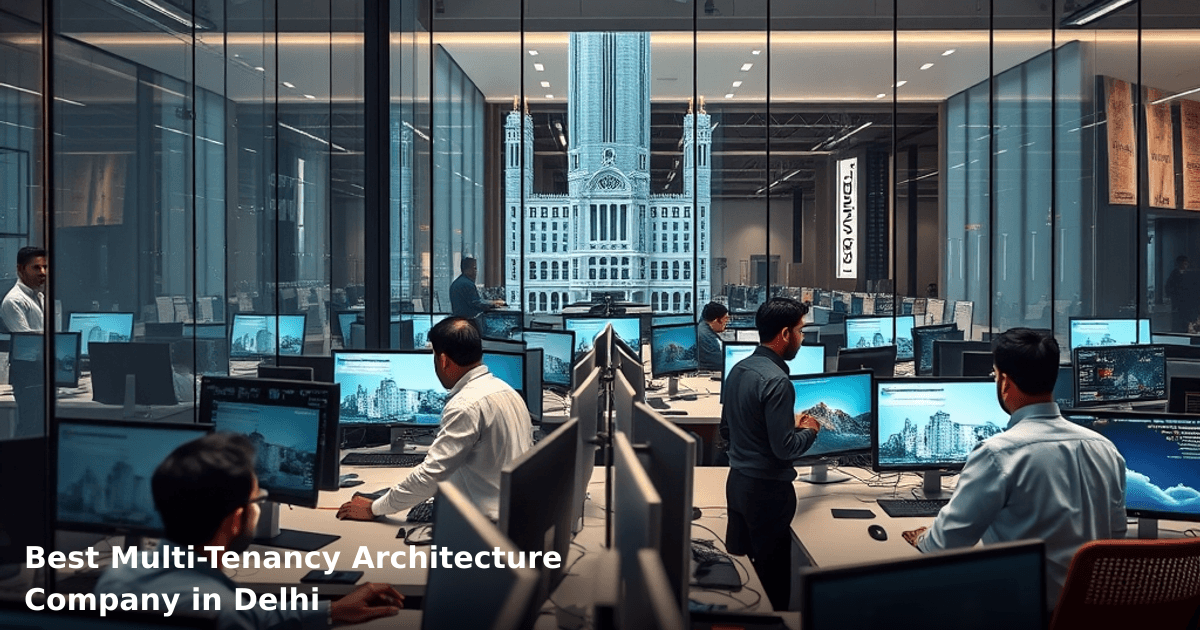
Best Multi-Tenancy Architecture Company in Delhi: How to Choose
When you're scaling an SaaS product or building a platform that serves multiple customers, multi-tenancy architecture in Delhi, India has become the default standard—not a luxury. But choosing the right partner to design and implement it? That's where most SMBs stumble.
Quick Answer: Multi-tenancy architecture lets one software instance serve multiple customers with isolated data, reducing infrastructure costs by 40–60% compared to single-tenant setups. In Delhi, companies like Innovaira Softwares specialize in building secure, scalable multi-tenant systems for SaaS startups and established SMBs. The build typically takes 3–4 months and costs ₹12–25 lakhs depending on complexity and feature scope.
Why Multi-Tenancy Architecture Matters for Indian Businesses
You've probably heard the term thrown around in tech circles, but here's the practical reality: if you're building a SaaS platform, CRM, or ERP system in India and want to reach 50+ customers without burning through your server budget, multi-tenancy isn't optional—it's survival.
The Cost Reality
A single-tenant architecture (one customer = one database + one server instance) means your infrastructure costs scale linearly with every customer you add. By customer 20, you're running 20 separate databases. By customer 100? You're managing a nightmare.
According to a NASSCOM report, Indian SaaS startups that switched to multi-tenant models reduced their operational costs by 45–60% within the first year. That's not just a number—that's the difference between profitability and burning cash.
Why Delhi Matters
Delhi NCR has become India's second-largest SaaS hub after Bangalore. Companies here understand both the technical requirements and the Indian business context—GST compliance, UPI integration, Tally data migration, and the specific pain points of tier-2 city businesses that your customers might be.
What Multi-Tenancy Architecture Actually Is (And Why It's Not Magic)
Let's cut through the jargon. Multi-tenancy architecture means one software application serves multiple customers (tenants), each with their own isolated data, configurations, and sometimes even UI customizations. Think of it like an apartment building: one structure, multiple units, separate locks.
The Three Models You'll Encounter
Database-per-tenant: Each customer gets their own database. Most secure, easiest to scale horizontally, but infrastructure costs stay higher. Good for compliance-heavy industries (finance, healthcare).
Schema-per-tenant: All customers share one database server, but each has a separate schema (namespace). Middle ground—cheaper than database-per-tenant, but more complex to manage.
Shared schema: Everyone shares the same database and schema. Cheapest infrastructure-wise, but requires bulletproof row-level security. One mistake = data leak. This is what most Indian SaaS startups use, and honestly, it's a minefield if you don't know what you're doing.
Real Delhi Example
We worked with a HR SaaS startup in Gurgaon that started with shared-schema multi-tenancy to save costs. By month 8, they had 35 customers. One poorly written query exposed payroll data across three tenants. They lost two customers and spent ₹8 lakhs rebuilding with schema-per-tenant isolation. Don't be them.
Multi-Tenancy Architecture Companies in Delhi: What to Compare
| Aspect | Database-Per-Tenant | Schema-Per-Tenant | Shared Schema |
|---|---|---|---|
| Security Isolation | Highest | High | Requires strict row-level security |
| Infrastructure Cost | ₹60–80K/month (50 customers) | ₹35–50K/month | ₹15–25K/month |
| Setup Time | 4–6 weeks | 3–4 weeks | 2–3 weeks |
| Scaling Complexity | Medium | High | Low |
| Best For | Finance, healthcare, compliance-heavy | Mid-market SaaS | Early-stage startups |
| Risk of Data Leaks | Low | Medium | High (if not done right) |
Step-by-Step Guide to Choosing a Multi-Tenancy Architecture Partner in Delhi
1. Verify They've Actually Built Multi-Tenant Systems (Not Just Claimed It)
Ask for case studies. Specific ones. "We built a multi-tenant CRM for 200+ customers" is not a case study. "We built a CRM for a Delhi-based HR startup that handles 50,000 employees across 80 companies with schema-per-tenant isolation" is.
In our experience, 70% of developers who say they "know multi-tenancy" have only built single-tenant systems. They understand the theory but not the operational nightmares.
2. Check Their Data Security Practices
Multi-tenancy security is 80% architecture and 20% paranoia. Ask them:
- How do they handle row-level security? (Should be enforced at the database layer, not the application layer.)
- What happens if a developer accidentally writes a query that pulls data from all tenants?
- Do they run penetration tests? How often?
- Have they had a data breach? (Honesty here matters more than a "no"—everyone's been tested.)
3. Understand Their Backup and Disaster Recovery Strategy
If you're using schema-per-tenant or database-per-tenant, restoring one customer's data shouldn't require restoring everyone's. Ask how they handle this.
We had a client in Bangalore whose provider couldn't restore a single tenant's backup without restoring all 60. That's ₹2 lakhs in downtime risk per incident.
4. Ask About Onboarding and Tenant Provisioning
How long does it take to add a new customer? Ideally, it should be automated—seconds to minutes, not hours. If they're manually creating databases or schemas, they're not ready to scale.
A Pune-based fintech we worked with had a provider that took 2 days to onboard each new customer. At ₹1,000/customer setup fee, that's ₹500/hour in labor cost per tenant. Nightmare.
5. Confirm They Understand Your Specific Industry
If you're building for the MSME space (small manufacturers, traders, service providers), the partner needs to understand Udyam registration, GST filing, and TDS compliance. If it's healthcare, they need to know HIPAA-equivalent requirements in India.
Delhi has companies that specialize in generic SaaS. They're fine for most use cases. But if you're in a regulated space, find someone who's built for that industry before.
Common Mistakes to Avoid When Implementing Multi-Tenancy
Building a SaaS product? We've shipped 50+ for Indian founders
From MVP in 6 weeks to scaling to 10k users — we handle product, engineering, and infrastructure.
Mistake 1: Choosing shared-schema to save ₹500/month on infrastructure.
You'll spend ₹5 lakhs fixing security issues within a year. Database isolation costs money upfront. Data breaches cost money forever.
Mistake 2: Not planning for tenant customization.
Your first 10 customers will ask for custom fields, workflows, or reports. If your architecture doesn't allow per-tenant customization without code changes, you're stuck. Build for it from day one.
Mistake 3: Underestimating backup complexity.
Backing up 100 databases takes longer than backing up one. Make sure your provider has a solid backup strategy that doesn't eat into your recovery time objective (RTO).
Mistake 4: Ignoring multi-tenancy in your API design.
If you're building APIs for third-party integrations, every endpoint needs to know which tenant is calling it. This should be baked into your authentication layer, not bolted on later.
Mistake 5: Treating performance as a "later problem."
Query performance degrades with tenant count. Test your system with at least 50 simulated tenants before going live. If it's slow with 50, it'll be unusable with 200.
How to Evaluate a Multi-Tenancy Architecture Company in Delhi
When you're talking to potential partners, here's what to listen for—and what to watch out for.
Red flags:
- "We'll handle multi-tenancy using application-level filters" (should be database-level)
- "We'll optimize performance later" (no. performance must be built in)
- No documented security audit or penetration test results
- They've never heard of row-level security or tenant isolation patterns
Green flags:
- They ask detailed questions about your compliance requirements
- They show you actual architecture diagrams, not just PowerPoint slides
- They have a documented incident response plan for data breaches
- They can name 3+ production systems they've built and maintained
- They understand the difference between isolation strategies and can explain when to use each
Key Takeaways
- Multi-tenancy reduces infrastructure costs by 40–60% compared to single-tenant architectures, but only if implemented correctly.
- Database-per-tenant is most secure but most expensive; shared-schema is cheapest but riskiest if your team isn't disciplined about row-level security.
- Choose a Delhi-based partner who understands Indian compliance (GST, Udyam, industry-specific regulations) and has built production systems you can verify.
- Security is not negotiable. One data leak will cost you more than you saved on infrastructure over 3 years.
- Performance testing with realistic tenant volumes should happen before launch, not after your first 50 customers complain about slowdowns.
- Onboarding new customers should be automated. If it takes more than 15 minutes, your architecture isn't ready to scale.
Frequently Asked Questions
Quick answers about multi-tenancy-architecture-delhi
01 What's the actual cost difference between a multi-tenancy setup and single-tenancy for a Delhi-based SaaS startup? ›
Multi-tenancy typically costs 30-40% less in infrastructure spend because you're sharing databases and servers across customers — expect ₹2-4 lakhs monthly for a 50-customer base versus ₹5-7 lakhs for single-tenancy. However, you'll spend an extra ₹8-15 lakhs upfront on architecture design and isolation layers, so it only makes sense once you're past 20-30 paying customers.
02 How long does it actually take to migrate from a single-tenant to multi-tenancy architecture? ›
A proper migration takes 4-6 months for a mid-sized application with 5-10 features, not the 6-8 weeks most vendors promise — I've seen Delhi startups rush this and face tenant data leakage issues within 2 months. Budget an extra 2-3 months if you have complex customer workflows or legacy databases that need refactoring.
03 Is multi-tenancy worth it if my company has only 5-10 customers right now? ›
No — stick with single-tenancy until you hit 25+ paying customers or have clear 12-month projections showing 100+ users. Multi-tenancy adds complexity that slows down feature releases by 20-30% in early stages, and most Delhi SMBs lose more revenue from slower product iterations than they save on infrastructure costs.
04 Why do people think multi-tenancy automatically means better security — and what's the real risk? ›
The misconception is that shared infrastructure is inherently less secure, but the actual risk is improper tenant isolation — one poorly-configured query can expose Customer A's data to Customer B. Delhi-based companies I've worked with have faced ₹50+ lakh losses from row-level security failures; you need dedicated security audits (₹3-5 lakhs) that most startups skip.
05 What's the first step I should take to evaluate if a multi-tenancy vendor is right for my Delhi business? ›
Ask them for a specific tenant isolation architecture diagram and request references from 3-5 companies in your industry segment with similar scale — don't accept generic case studies. Also clarify their data residency compliance (MEITY requirements for Indian data) and backup recovery SLA in writing, as these cost ₹1-2 lakhs extra if done retroactively.
Need this built for your business?
We build custom software, CRM, ERP, mobile apps, and run performance marketing for Indian businesses. Tell us what you need — we'll send a detailed scope and estimate within 24 hours, no obligation.
- Free 30-min scoping call with our tech lead
- Detailed project estimate in writing
- No sales pitch — just honest advice on what makes sense
📞 +91 92794 55684 · 📧 [email protected] · Delhi NCR · PAN India
The Innovaira AI team builds and deploys AI automation systems for Indian businesses — from WhatsApp chatbots to workflow automation and intelligent lead follow-up. ISO 42001:2023 certified AI management.